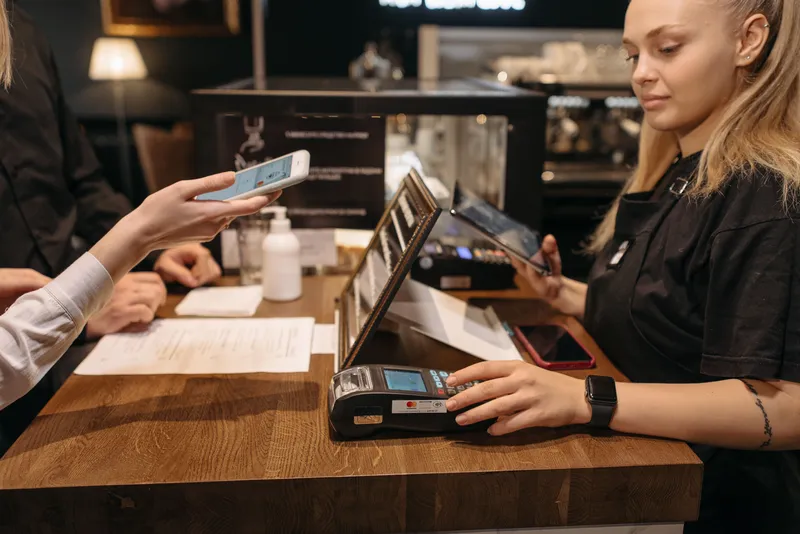
A coffee shop's customers message it on Telegram to order a takeaway. A training centre collects trial-lesson requests in the administrator's personal chats. A delivery service answers the same question about order status dozens of times a day. In all three cases the customers are already on Telegram, and the business handles their requests by hand.
A bot takes over the repetitive part: it accepts a request, asks clarifying questions, shows a catalogue, takes payment and sends notifications. But a bot is not a magic button. A poorly designed flow annoys customers more than a slow manager does.
Below we cover what a bot does well, when you need a Mini App or a website instead, how long development usually takes and what the budget is made of. There will be no specific amounts: the price depends on scope, and it can only be named honestly after the task has been analysed.
What a bot does best
- Requests and bookings. The customer picks a service, date and time and leaves a phone number. The request goes straight to a manager or into the CRM instead of getting lost in a chat.
- Catalogue and ordering. A cafe menu, a car service price list, a course schedule. For a small range a bot is more convenient than a website: nothing to install, no sign-up.
- Payment. An invoice or payment link right in the chat, with confirmation once the money is taken.
- Notifications. Order status, a reminder the day before an appointment, a message that documents are ready. Fewer calls asking "so what's happening?".
- Answers to common questions. Address, opening hours, delivery terms, prices. Complex questions are passed to a real person.
- Internal tasks. A bot for staff: clocking in for a shift, a salesperson's daily report, a purchase request, an alert to the manager about a large deal.
Bookings and notifications pay off fastest: customers understand them from the first message, and they take load off the administrator from day one.
When a bot is not the best choice
A bot works through dialogue: message, buttons, reply. That suits short flows but becomes painful if a customer has to scroll through hundreds of products, compare specifications and filter by price. For that, Telegram has Mini Apps: web applications that open inside the messenger and look like a familiar interface with product cards and a cart. And if your customers find you through search rather than Telegram, you need a website.
| Format | Fits when | Limitations |
|---|---|---|
| Bot | short flows: request, booking, status, payment, notifications | awkward for a large catalogue and complex forms |
| Mini App | catalogue, cart, personal account inside Telegram | takes longer and costs more than a bot, needs interface design |
| Website | customers come from search and ads, SEO matters | people have to be brought to the site, notifications are harder |
A combination often makes sense: a bot for notifications and quick actions, a Mini App or website for choosing products. You can start with the bot and add the rest once it is clear what customers actually use.
Timelines: what they depend on
The guidelines below show orders of magnitude, not a promise. The real timeline depends on scope, how ready the texts are and how quickly the client answers questions.
- A request or booking bot without integrations: usually from a few days to a couple of weeks.
- A bot with a catalogue, payments and an admin panel for staff: typically several weeks.
- A bot plus a Mini App and integrations with a CRM, accounting system or warehouse: from one or two months, in stages.
Most of the time goes not on buttons but on integrations and approvals: API access to the accounting system, the contract with the payment provider, texts nobody got round to writing.
What the budget is made of
The cost of a bot is not set by the number of buttons. It consists of several parts, and contractor proposals should be compared on each of them.
- Flow and texts. A dialogue map: what the bot asks, which answers are possible, what happens on an error. A good contractor starts here, not with code.
- Logic and database. Storing requests, customers, orders and statuses.
- Admin panel. Where staff see requests, change prices and reply to customers. Sometimes a Telegram work group or a spreadsheet is enough, sometimes a full panel is needed.
- Integrations. CRM, 1C or another accounting system, payment provider, telephony. Each integration is a separate piece of work.
- Server and support. A bot runs around the clock and needs hosting, monitoring and someone to fix failures.
The difference in effort between a simple request bot and a bot with payments, a catalogue and integrations can be several-fold. That is why price ranges in proposals vary so much, and the final price always depends on scope. Compare the scope of work, not the total. We wrote about reading such proposals in red flags in a proposal.
Payments in a bot
There are two ways to take money in Telegram. The first is Telegram's built-in payments: according to Telegram's documentation, a payment provider is connected to the bot through BotFather, after which the bot issues an invoice right in the chat. The second is a link to your payment provider's checkout page. Click and Payme explicitly list Telegram bots among payment methods on their official business pages. Which route to choose depends on your contract with the provider and on how receipts will be issued. More in our article on online payments on a website and in a bot.
What to prepare before development
- One main flow. What the customer should do in the bot first. Everything else can wait for version two.
- Texts and answers. Common questions and answers, prices, terms. The contractor does not know your business better than you do.
- A person in charge. Who answers bot requests and when. A bot that accepts a request and then goes silent is worse than no bot.
- Bot ownership. The bot is created in BotFather from the company's or owner's account, not the developer's personal one. Otherwise, if you change contractors, you may lose the bot along with its subscribers.
- Personal data. The bot collects names and phone numbers, so you need consent and clear storage rules. See our article on personal data on websites and in CRMs.
Questions for the contractor
- Show me bots you have built that are running now. Can I try them?
- Where will the bot run, who pays for the server and what happens if it goes down at night?
- Who owns the code, the bot and the subscriber base after handover?
- How will staff handle requests, and which admin panel is included in the price?
- How much do support and changes cost after launch?
The answers will tell you more about a contractor than a polished prototype.
The bottom line
A Telegram bot pays off wherever there are repetitive customer actions: requests, bookings, statuses, payments. Start with one flow, register the bot to the company and compare proposals by scope of work, not by the final figure.
Describe your task to the IT Caravan AI assistant: it will draft a brief for the bot and match companies, and verified vendors will send proposals. It is free for clients. Or browse bot developers in the catalogue.